— Harmony Journal · Fertility
Fertility Acupuncture Before IVF what the evidence actually says.
One small study made fertility acupuncture famous. Twenty years of larger trials tell a more careful story — here it is, without the hype.
Quick answer
Fertility acupuncture before IVF is a course of acupuncture sessions — commonly 1 to 2 visits per week for 8 to 12 weeks ahead of a cycle — used to support relaxation and overall wellness during fertility treatment. At Harmony Acupuncture & Wellness Spa in McLean, an initial 60 minute session is $150, follow-ups are $100, and a package of 5 sessions is $400, or $80 per visit. The research is mixed: acupuncture may help with stress during treatment, but large sham-controlled trials have not confirmed higher live birth rates.
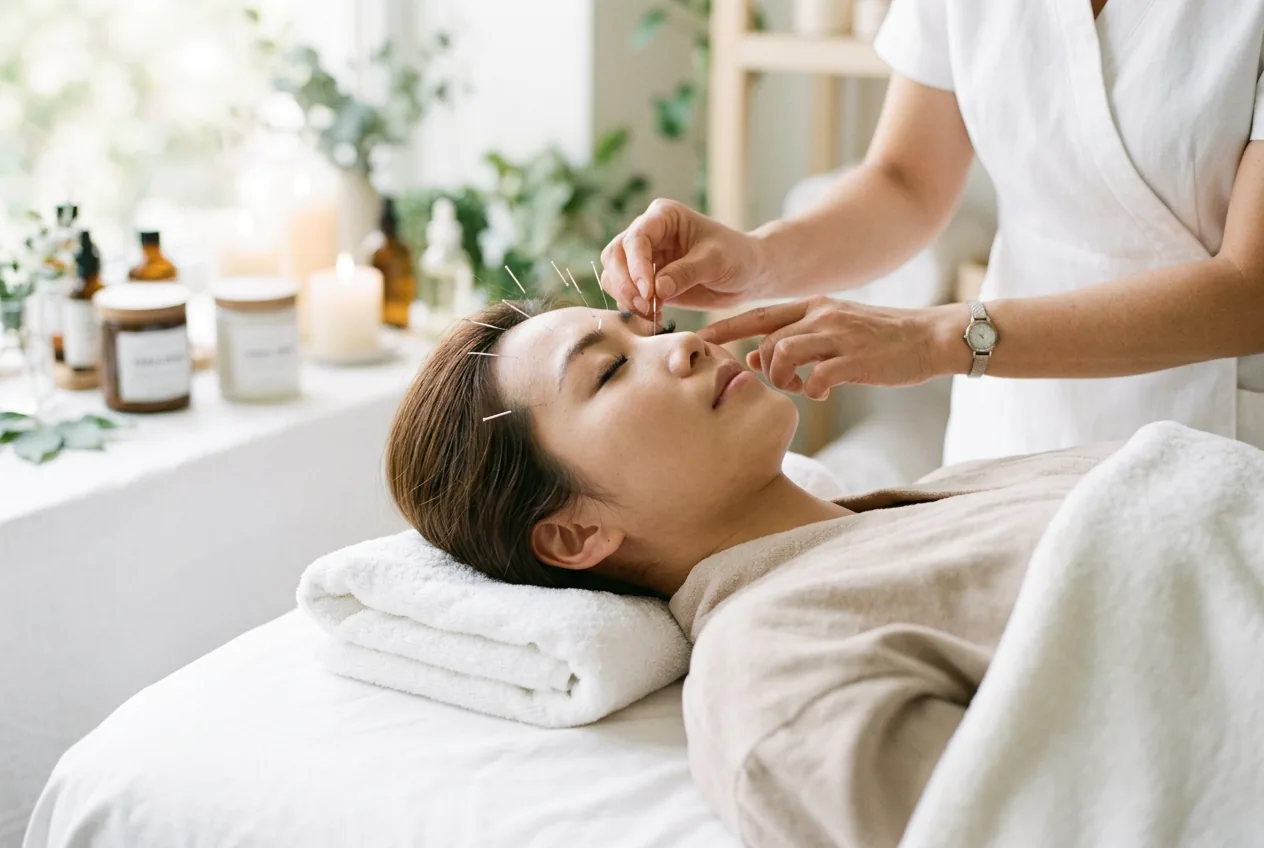
- Focus
- Acupuncture before IVF
- Evidence
- Mixed for outcomes; may ease stress
- Typical runway
- 8–12 weeks before a cycle
- Initial visit
- $150 · 60 minutes
— 01
It began with 160 women in Germany.
In 2002, a research team led by Wolfgang Paulus published a study in the journal Fertility and Sterility that would launch an entire sub-industry. The design was simple: 160 women undergoing IVF, half receiving acupuncture immediately before and after embryo transfer, half receiving none. The acupuncture group's clinical pregnancy rate came in at 42.5 percent against 26.3 percent for the control group. Fertility clinics noticed. Patients noticed more.
Within a few years, acupuncture on transfer day had become one of the most requested add-ons in reproductive medicine, and fertility acupuncture grew into a recognized specialty with its own board certification. If you are researching acupuncture before IVF in Northern Virginia today, that 2002 study — cited, summarized, often stripped of its caveats — is the reason the option exists on your radar at all.
But a single unblinded study of 160 people is a starting pistol, not a verdict. The control group received nothing, which means nobody was accounting for expectation effects, extra attention, or the simple physiology of lying still for 25 minutes on the most stressful day of a medical cycle. Researchers understood this. So they did what researchers do: they ran bigger, better-controlled trials.
What happened next is the real story — and if you are weighing whether to spend money and hope on pre-IVF acupuncture, it is the part you deserve to hear first, before any clinic, ours included, tells you what it offers.
One definitional note before going on: the Paulus study measured clinical pregnancy — a gestational sac on ultrasound — not live births. The distinction sounds technical and is anything but. It became central to how the later, larger trials were designed, and to how honest practitioners talk about this therapy today.
— 02
Larger fertility acupuncture trials complicated the story.
The most rigorous test to date was published in JAMA in 2018: a multicenter trial of more than 800 women across 16 IVF centers, comparing real acupuncture against a sham version using non-penetrating retractable needles. The result was a wash. Live birth rates in the acupuncture and sham groups were not significantly different. In the study's own careful language, the findings "do not support" acupuncture for improving live birth outcomes.
Meta-analyses — studies that pool many trials — have gone back and forth ever since, and the pattern in that back-and-forth is itself informative. Analyses that include unblinded trials with no-treatment controls tend to find a benefit. Analyses restricted to sham-controlled trials tend to find little or none. Reviewers repeatedly flag "low-quality evidence," "significant heterogeneity," and "small effect sizes" — the vocabulary of a literature that cannot yet support a confident yes.
What this means in plain terms
It means the famous 42.5 percent figure was probably not the needles. When patients who believe they are receiving acupuncture do just as well as patients actually receiving it, the honest conclusion is that expectation, ritual, and rest are carrying much of the load. That does not make the experience worthless — but it does mean no ethical practitioner should tell you acupuncture will raise your odds of a baby.
We run a fertility practice, and we tell patients exactly that. Anyone in Northern Virginia who quotes you a success-rate boost is quoting a study the field has since outgrown. The case for pre-IVF acupuncture rests somewhere else entirely — and that is where it gets more defensible, not less.
— 03
The claim that survives scrutiny is stress relief.
Ask anyone mid-cycle: IVF is a grind. Daily injections, dawn monitoring appointments, work calendars bent around retrieval windows, and a two-week wait that moves like a season. Surveys of fertility patients consistently rank the psychological burden among the hardest parts of treatment — for some, comparable to other major medical diagnoses.
This is the territory where acupuncture's evidence looks steadiest. NCCIH, the federal center that reviews complementary health research, notes that relaxation-based and mind-body practices may reduce stress symptoms, and many patients find acupuncture sessions genuinely calming. Small studies of acupuncture during fertility treatment report lower self-rated anxiety, though — the hedge matters — these studies are small and expectation effects are hard to exclude.
Here is the distinction we think every patient should hold onto: felt benefit is real even when the mechanism is uncertain. A protected hour, 1 to 2 times per week, in a quiet room where nobody needs anything from you, where a licensed practitioner listens to how the cycle is actually going — that is not nothing during IVF. It may be the only unhurried medical-adjacent hour in your month. Whether the needles add a measurable physiological effect on top of that rest is precisely what science has not settled.
The two-week wait deserves its own mention. Patients often describe it as the hardest stretch of the entire cycle — the procedures are done, the control is gone, and the calendar crawls. A standing acupuncture session in that window gives the wait a shape: one hour, midway through, where the only job is to rest. Keep the hedge intact: no one has shown this changes the test result. Patients simply report that the wait becomes easier to carry, and that is the claim, whole and unexaggerated.
If stress is the main thing you want help with, you may not even need the fertility framing — our acupuncture for anxiety and stress page covers that use case on its own terms, evidence and limits included.
— 04
Fertility acupuncture practitioners plan in 90-day windows.
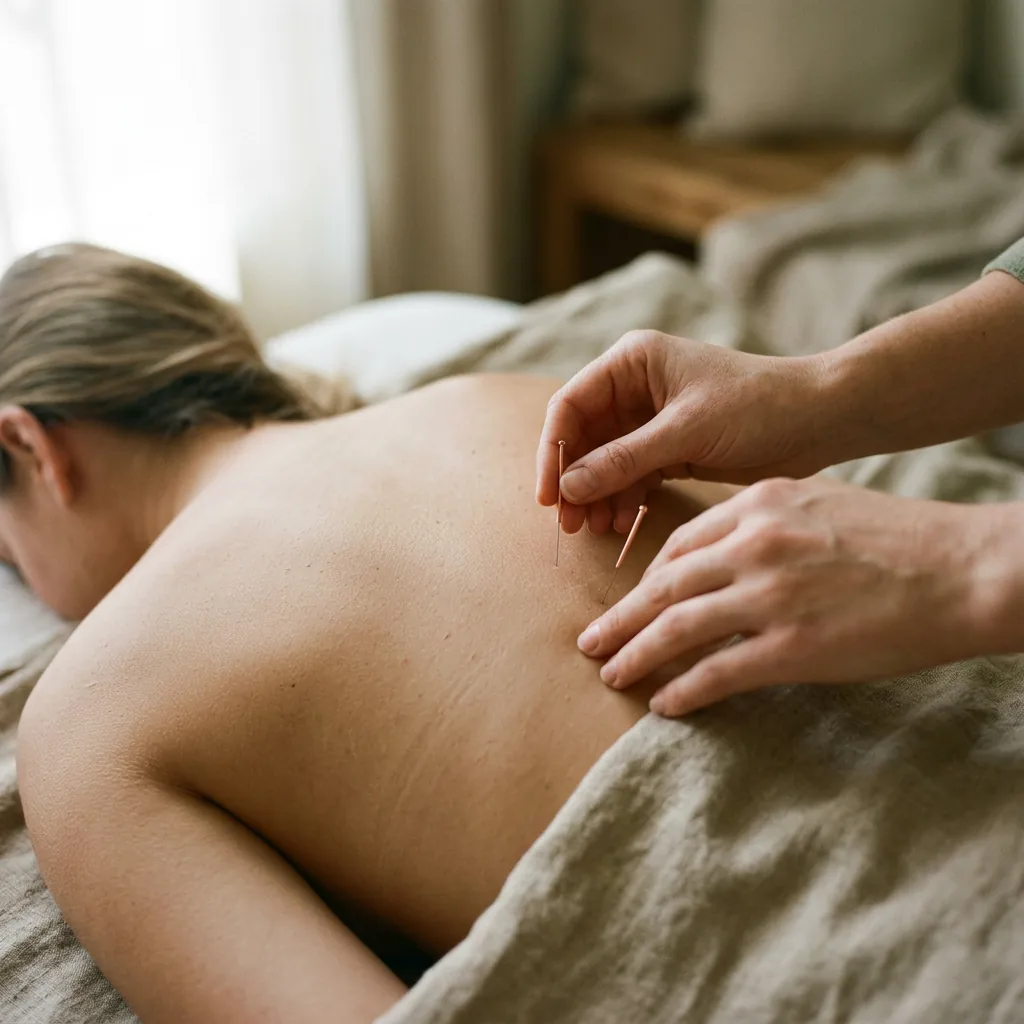
If you decide the calming case is enough, the practical question becomes timing. The convention among fertility acupuncturists is a runway of roughly 8 to 12 weeks before a planned cycle, reasoning from the fact that ovarian follicles mature over a window of about 90 days. The logic is traditional rather than proven — no trial has established that a longer runway changes outcomes — but it produces a sane, unhurried schedule that patients tend to keep.
| Phase | Timing | Session focus |
|---|---|---|
| Foundation | Weeks 12–9 before cycle | Initial 60 minute consult, health history, stress baseline, weekly sessions begin |
| Rhythm | Weeks 8–5 | 1 to 2 visits weekly; sleep, digestion, and stress tracking |
| Ramp | Weeks 4–1 | Coordination around your medication calendar as stimulation approaches |
| Cycle | Stimulation & transfer | Gentler sessions timed around monitoring visits, only with your clinic's awareness |
Sessions themselves are quiet: a short check-in, thin sterile needles at points on the limbs and abdomen, then 20 to 30 minutes of rest with low light. Most patients describe the sensation as a dull heaviness rather than pain, and many fall asleep on the table.
The clinical details — point selection, what a typical week looks like, male-partner support — live on our fertility acupuncture page. This article's job is narrower: to make sure you arrive there knowing what the treatment can and cannot claim.
— 05
Transfer-day acupuncture is its own question.
The Paulus protocol that started everything was specifically about transfer day — one session shortly before the embryo transfer, one shortly after. Some patients still ask for exactly that, and some practices market it as a standalone product. It is worth being precise about what the evidence now says: transfer-day-only acupuncture is the version the large sham-controlled trials most directly tested, and it is the version they most clearly failed to support. If any approach retains a plausible case, it is the longer, stress-focused runway — not a single dramatic appointment on the biggest day of your cycle.
There is also a logistics problem nobody warns you about. Transfer schedules move. Embryology labs shift your window on a day's notice, and patients who tried to sandwich acupuncture around a transfer often describe the scramble as the most stressful part of the week — which, for a therapy whose defensible benefit is calm, is a strange trade. Our advice runs the other way: build the acupuncture around the weeks, not the day. If you want a session near transfer, book it as a quiet bookend — the evening before, or the day after — at the clinic, where you can actually rest, rather than engineering a same-hour sprint between two offices.
Choosing a practitioner matters more than choosing a protocol
Ask three questions of anyone you consider: Are you licensed to practice acupuncture in Virginia? How many patients in active fertility treatment have you worked with? Will you coordinate with my fertility clinic if I ask? Clear, unhesitating answers tell you more than any package name. Our practitioners are licensed, with 15+ years of practice and 5,000+ clients served — and they will give you the same unvarnished reading of the evidence you just got.
— 06
Your fertility clinic stays in charge.
This is non-negotiable, and any acupuncturist worth seeing will say it unprompted: acupuncture is adjunctive care. Your reproductive endocrinologist runs the protocol; acupuncture fits around it, never against it. Tell your fertility clinic you are receiving acupuncture, and tell your acupuncturist exactly where you are in the cycle at every visit. Good practitioners adjust — lighter sessions during stimulation, nothing experimental near retrieval or transfer.
Herbal supplements deserve extra caution. Chinese herbal medicine has a long tradition in fertility care, but many reproductive endocrinologists ask patients to avoid herbal formulas during stimulation and transfer because interactions with fertility medications are poorly studied. Our position is simple: we do not dispense herbs, and anything herbal you take from any source should be explicitly cleared by your medical team during a medicated cycle. If supportive care beyond needles interests you for the months before treatment begins, gentle meridian massage and diet and lifestyle guidance from a TCM perspective are the tools we use — bring the conversation to both providers. Combined programs are quoted individually at your consultation — call or text 240-715-5939.
And know the moments when acupuncture is the wrong appointment entirely. Severe abdominal bloating or pain during stimulation, rapid weight gain, shortness of breath — possible signs of ovarian hyperstimulation — or heavy bleeding or fever at any point mean you call your fertility clinic or seek urgent care now, not a wellness provider. We would rather lose a session fee than have anyone hesitate on that.
— 07
The practical part of fertility acupuncture: cost, location, and a first visit.
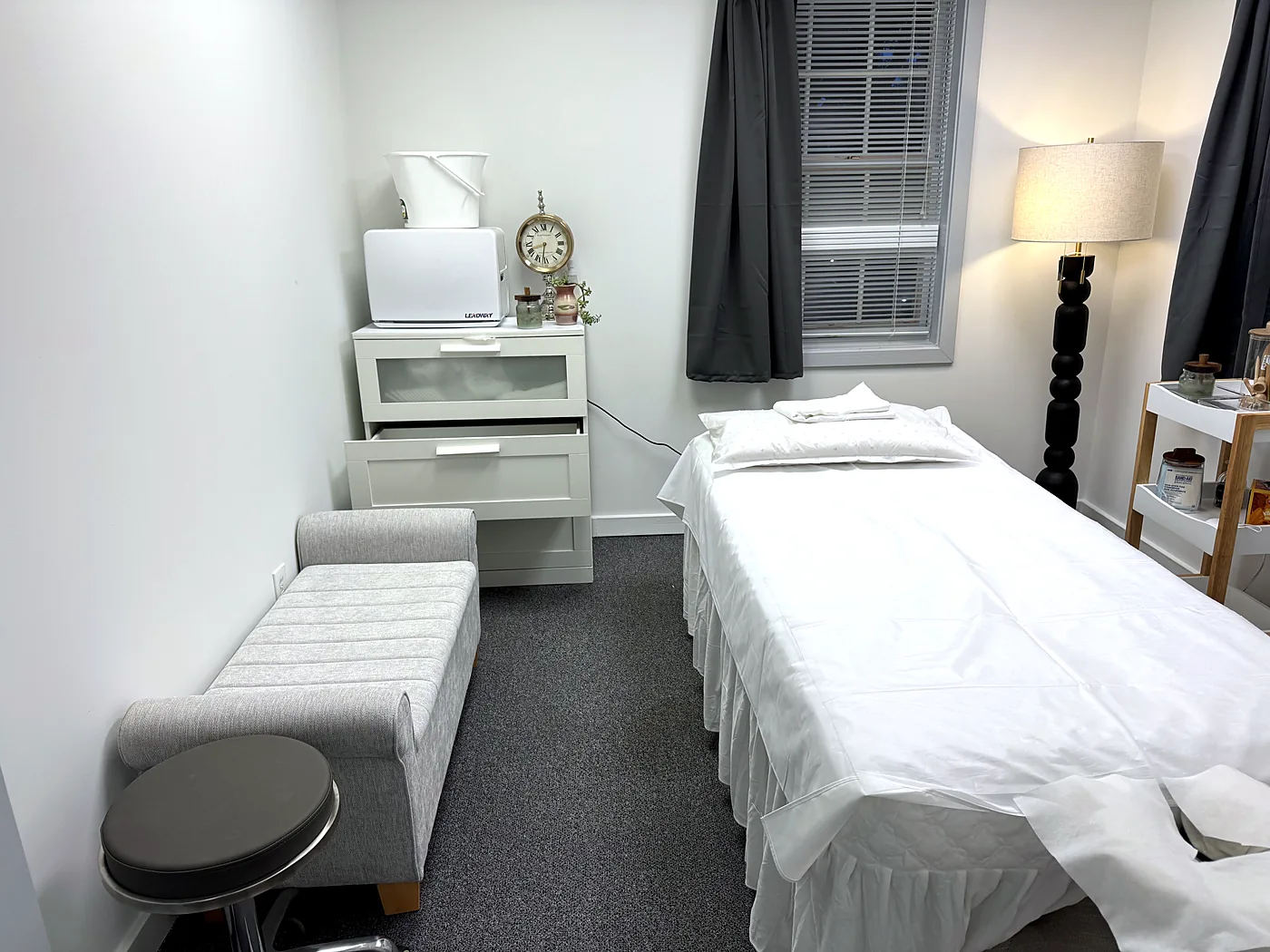
Fertility acupuncture in Northern Virginia is largely self-pay. Insurance plans that cover acupuncture usually attach it to pain diagnoses rather than fertility support — so budget as if uncovered, then let a benefits check surprise you. We accept major insurances like UnitedHealthcare and Aetna for covered indications; text your policy info to 240-715-5939 and we will verify for free.
Self-pay numbers are flat and public: $150 for the initial 60 minute session, $100 for follow-ups, and a 5 session package at $400 — $80 per visit, which suits the weekly cadence most pre-IVF plans use. A 12 week runway at one visit per week therefore lands in the neighborhood of $1,150 using packages: real money, and worth weighing calmly against what you are already spending on treatment. Full tables are on the pricing page.
Location matters mid-cycle, when appointments multiply. The clinic sits at 1481 Chain Bridge Rd, Ste 300 in McLean — Route 123 a few minutes from the GW Parkway, with free parking at the door and hours from 9 AM to 9 PM, 7 days a week. Patients drive in from Arlington, Falls Church, Vienna, and DC; evening and weekend slots are the ones fertility patients use most.
Three next steps, in order:
- Talk to your fertility clinic first. Tell them you are considering acupuncture and ask if anything in your protocol argues against it. Their answer outranks ours.
- Book a consultation, not a commitment. One 60 minute initial session will tell you whether the setting and practitioner fit. Our new patient guide covers what to expect and how to prepare.
- Decide with a calendar, not a hope. If you start, pick a defined runway — say, 10 weeks — and judge the investment by how you feel through the cycle, not by outcomes no one can promise.
This article is general health education, not medical advice, and nothing in it should influence your medical fertility treatment. Acupuncture may support relaxation during IVF; it has not been shown to improve live birth rates. Every treatment decision belongs with you and your reproductive endocrinologist.
— Questions
Asked & answered.
When should I start acupuncture before an IVF cycle?
Will acupuncture increase my chances of IVF success?
Is acupuncture safe during an IVF cycle?
How much does fertility acupuncture cost in Northern Virginia?
— Research & references
NCCIH — Traditional Chinese Medicine: What You Need To Know
Federal overview of acupuncture and TCM: promising findings for some uses, with evidence gaps that call for cautious claims.
NCCIH — Stress
Reviews suggest some complementary and relaxation-based approaches may help reduce stress symptoms, though study quality varies.
Mayo Clinic — Relaxation Techniques
Structured relaxation practices may reduce stress symptoms and support sleep and wellbeing alongside — never instead of — medical care.
Citations are summarized — please consult the original sources. This page is general health education, not medical advice for your specific case; results vary and acupuncture works best alongside, not instead of, care from your physician.
— Keep exploring
Condition
Fertility Acupuncture
IVF and IUI support, the 90-day plan, and realistic expectations.
Location
Acupuncture in McLean, VA
Chain Bridge Rd clinic — hours, parking, insurance, and services.
Book
New Patients & FAQ
What a first visit looks like and how to prepare for it.
Condition
Pregnancy & Prenatal Acupuncture
Gentle support for the next chapter, from morning sickness on.