— TCM & Massage Therapies · McLean, VA
Gua Sha & Hot Stone Therapy in McLean, VA.
One scrapes, one warms — a jade-tool technique from Traditional Chinese Medicine and the warmed-basalt massage classic, both in daily use at our Chain Bridge Rd clinic. Here is what each actually does, what the marks mean, and how to add them to a session.
Quick answer
Gua sha is a Traditional Chinese Medicine technique in which a smooth jade or stone tool is stroked firmly across lubricated skin — typically for 3 to 8 minutes per area — to stimulate circulation; hot stone therapy glides smooth, warmed basalt stones along tired muscles during massage. At Harmony Acupuncture & Wellness Spa in McLean, VA, each is a $20 add-on to any 60 minute massage — free for members. Call or text 240-715-5939. Open 7 days, 9 AM to 9 PM.
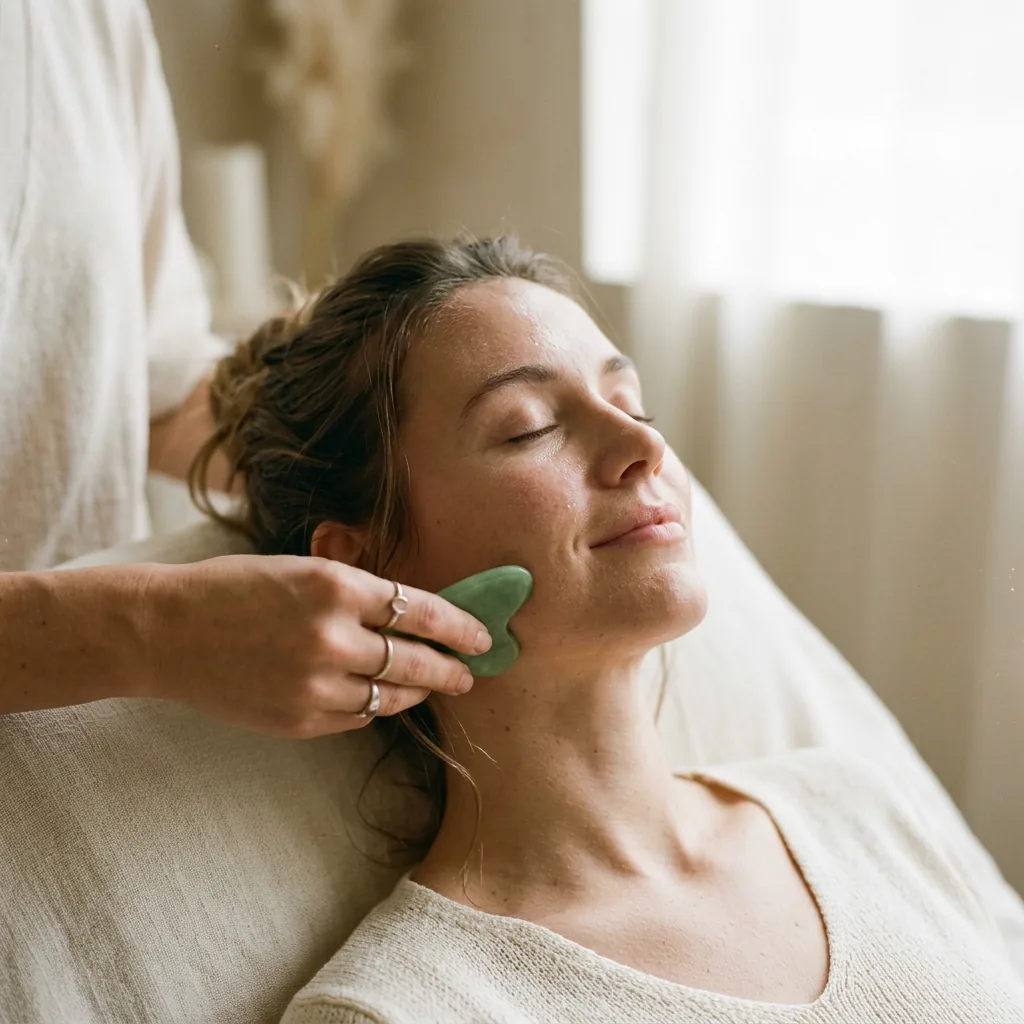
- Gua sha add-on
- $20 · free for members
- Hot stone add-on
- $20 · free for members
- Also offered
- Gua sha within acupuncture sessions
- Hours
- 7 days · 9 AM – 9 PM
— 01
What is gua sha?
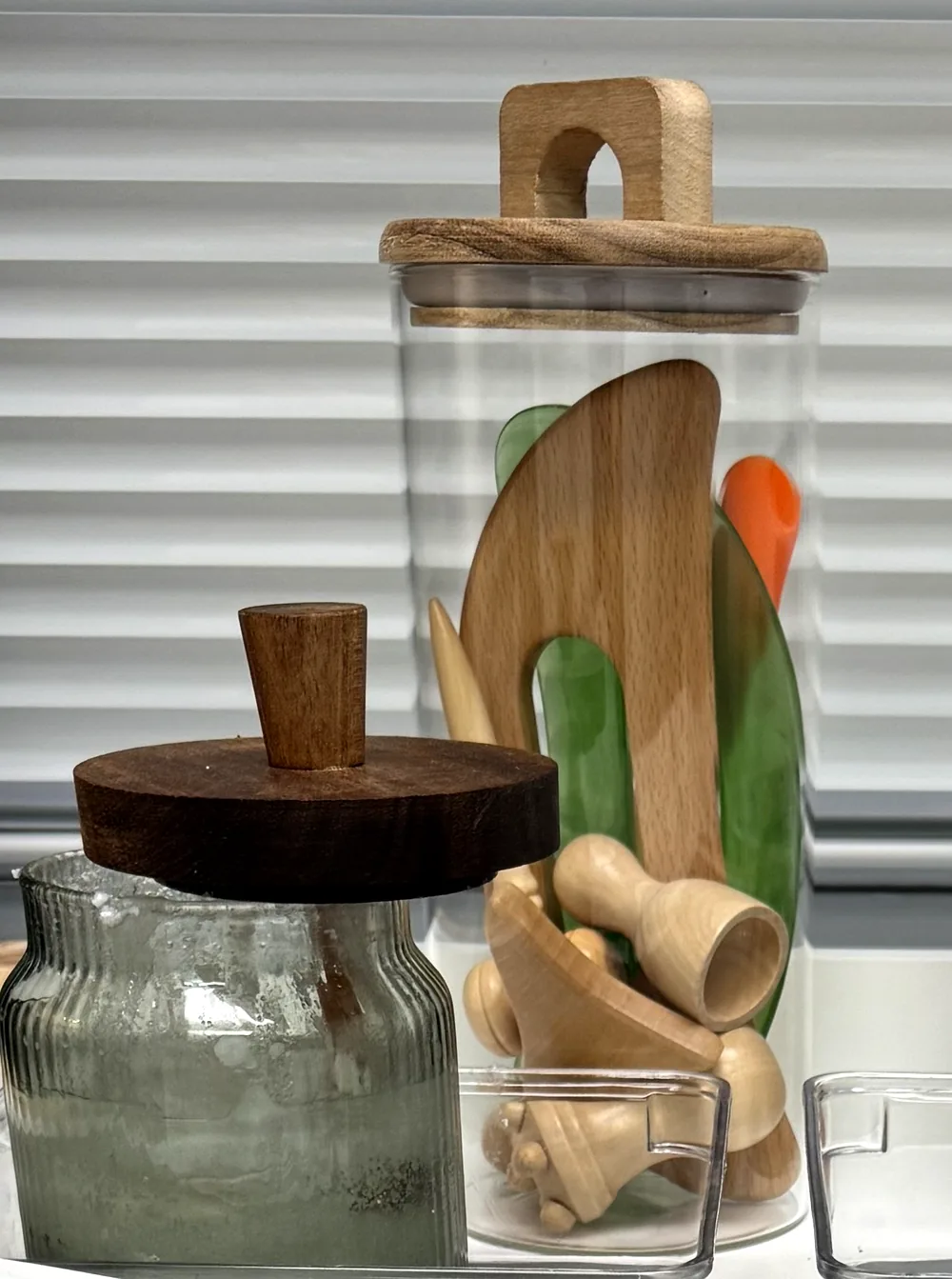
Gua sha translates roughly as "scraping sand," which sounds harsher than it feels. A practitioner oils the skin — usually across the upper back, neck, or shoulders — and draws a smooth-edged tool along the muscle in firm, repeated strokes. Our tools are traditional: polished jade and stone pieces, kept in jars at the clinic, each shape suited to a different contour of the body. The strokes raise redness and, often, a speckled flush the tradition calls "sha."
In TCM terms, raising sha vents heat and moves stagnant qi and blood out of tissue that has been tight too long. In physiological terms, the strokes create transient redness by increasing surface circulation — research suggests a temporary boost in local microcirculation after treatment, and small studies have reported short-term relief in neck and shoulder tension, though the overall evidence base is thin and we present it that way. What clients report most consistently is simpler: the area feels looser and warmer, the way a stubborn muscle feels after a very thorough massage.
Therapeutic vs. cosmetic gua sha
You have probably seen gua sha marketed as a jade-roller skincare ritual. Related tool, different job. Cosmetic facial gua sha is feather-light; therapeutic body gua sha is firm, brisk, and aimed at musculoskeletal tension. We offer both — the facial version appears on our facial acupuncture page — but this page is about the therapeutic kind.
— 02
What is hot stone therapy?
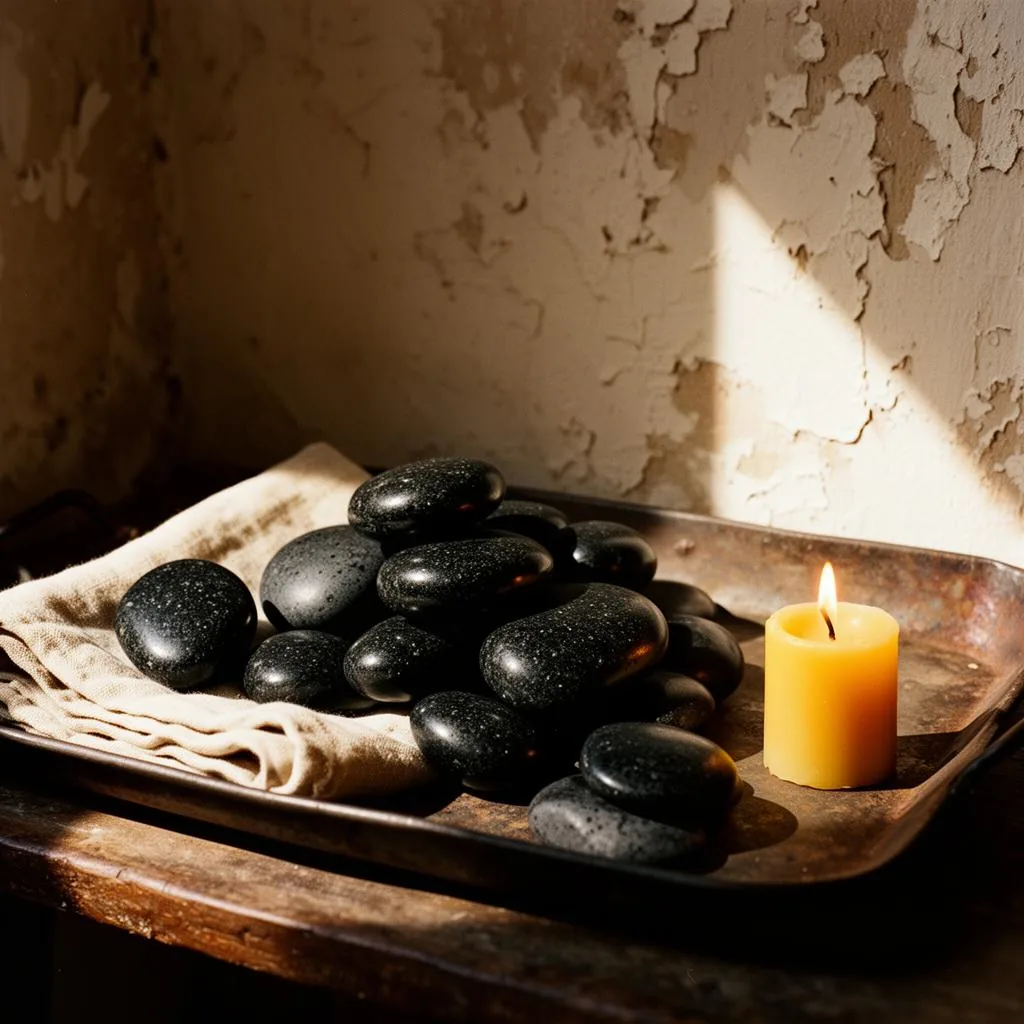
Hot stone therapy is exactly what it sounds like, done more carefully than it sounds. Smooth basalt stones — a dense volcanic rock that holds heat evenly — are warmed in a temperature-controlled water bath, then glided along the muscles of the back, shoulders, and legs during your massage, or rested briefly at key points while your therapist works elsewhere. Every stone is checked by your therapist's hand before it reaches your skin. What you feel is a spreading, penetrating warmth that most clients find deeply comfortable, closer to sunlight on the back than to heat-pack heat.
Why add heat to a massage? Warmth encourages tight tissue to let go — muscles tend to soften faster under a warm stone than under hands alone, which lets your therapist work deeper without pressing harder. The modern evidence frame is modest and we keep it that way: research summarized by NCCIH suggests massage therapy may offer short-term relief for some pain and stress, and applied warmth is a time-honored comfort measure for stiff muscles — but hot stone work has not been shown to cure anything, and we will not tell you otherwise. Many clients simply find it the most relaxing hour on our menu.
Practical notes
The stones stay comfortably warm, never scalding — the water bath is temperature-controlled, and you are the final sensor: if anything feels too warm, say so and the stone is gone in a second. Sessions are unhurried; the stones are woven through your 60-minute massage rather than bolted on at the end. Tell your practitioner about any reduced skin sensation (from neuropathy, for example), since feeling the warmth accurately is part of keeping the technique safe, and during pregnancy we keep heat conservative or skip it. A timing tip: many clients book warming sessions in late fall and winter, when Northern Virginia's damp cold sets in — though there is no wrong season to start.
— 03
Conditions they may help.
Gua sha and hot stone therapy are supporting players, usually woven into a broader acupuncture or massage plan. Here is where each tends to be used at our McLean clinic — with the standing caveat that these are traditional applications plus early research, not proven cures.
- Neck and shoulder tension — gua sha's home turf; small trials suggest short-term relief. See our neck and shoulder pain page.
- Upper back tightness from desk work — the Route 123 commuter-and-keyboard pattern; gua sha covers broad, flat muscle quickly.
- Low back stiffness, worse in cold — a classic hot stone assignment; warmth may help stiff muscles let go, and the pattern often pairs with needles on our back pain protocols.
- Stress and seasonal slumps — many clients pair warming bodywork with acupuncture-based seasonal care; the hedged full story is on our immune support page.
- Menstrual comfort — gentle warmth over the low back is a time-honored comfort measure; see women's health.
And the limits, plainly: neither technique repairs structural damage, shrinks a disc herniation, or treats infection or disease. Marks and warmth are not medicine for everything. If you have numbness or weakness that is spreading, fever alongside back or neck pain, sudden severe headache, or pain after an accident — that is a doctor visit now, not a gua sha appointment. We also avoid gua sha over broken skin, rashes, or in people with bleeding disorders or on blood thinners without medical clearance, and we keep hot stone heat moderate — or skip it entirely — for anyone with reduced skin sensation, certain cardiovascular conditions, or a pregnancy.
— 04
As add-ons to acupuncture & massage.
The easiest way to try either therapy is to attach it to a session you are already booking. Gua sha and hot stone are two of our three standard massage add-ons: $20 each added to any 60-minute massage, and free once you are a member (membership is automatic with a package of 5 or more massage sessions — no signup, no fee). The third add-on, cupping, is priced identically; the full menu is on our pricing page and the membership math on our packages page.
Within acupuncture sessions, gua sha appears where your treatment plan calls for it — typically to open a tight region before needling. Your acupuncturist folds it in as clinically appropriate rather than as an upsell; if your case does not need it, you will hear that. Hot stone lives on the massage side of the menu: ask for it when booking any 60-minute Meridian, prenatal, or postnatal session and your therapist weaves the warmed stones through the hour — with heat kept conservative, or skipped, for prenatal work.
Prefer a standalone gua sha session? We arrange those individually, since length and scope vary by person — pricing is a personalized quote at your consultation. Call or text 240-715-5939, or book an initial visit through our booking page and raise it there. Fair warning that choosing between gua sha and cupping is a genuinely common dilemma; the honest answer is that they overlap heavily, and your practitioner's hands-on assessment is a better tiebreaker than any web page. Either way the add-on price is identical, so the decision costs nothing to change next visit.
— 05
What to expect & aftercare.
Both therapies are brief, low-drama, and easy to fit inside a lunch hour from Tysons or downtown McLean. Here is the honest before-and-after:
| Gua sha | Hot stone | |
|---|---|---|
| During | Firm, brisk strokes over oiled skin; intensity adjustable and should never be sharp pain | Smooth warmed stones glide along muscle; always comfortably warm, never burning |
| Immediately after | Redness and speckled sha marks; area feels loose and warm | Mild pinkness where stones lingered; most feel deeply relaxed or pleasantly drowsy |
| Marks | Common and expected; typically fade in 2 to 4 days, occasionally up to a week | None — the warmth leaves no lasting marks |
| Aftercare | Keep the area covered and warm for 24 hours; drink water; skip intense training that day | Drink water; avoid chilling warmed muscles right after; take the evening easy |
Sha marks deserve one more sentence, because they photograph dramatically: they are speckled surface redness from increased circulation, not bruises from injury, and they are painless. Traditionally, darker sha is read as longer-standing stagnation — read that as folklore with a wink, not diagnostics. If marks would be awkward before an event, say so; placement and pressure are adjustable. Every session is performed by our licensed, trained practitioners in private rooms at 1481 Chain Bridge Rd, Ste 300, with free parking at the door — first-timers can preview the whole visit flow on our new patients page.
— Pricing
| Massage Add-Ons | Price | Member |
|---|---|---|
| Cupping therapy | $20 | Free |
| Gua sha therapy | $20 | Free |
| Hot stone therapy | $20 | Free |
Added to any massage session. Free for members.
Parking & arrival
Easy in, easy out on Chain Bridge Rd
- Free parking directly on-site at 1481 Chain Bridge Rd, Ste 300 — no garages, no meters.
- Look for the red-brick building; we're in Ste 300 with signage at the entrance.
- Open every day 9 AM – 9 PM — lunch-break, after-work, and weekend visits all fit.
- Arrive 10 minutes early for your first visit to settle in — WiFi and a snack bar are waiting.
— Questions
Asked & answered.
Does gua sha hurt?
What's the difference between gua sha and cupping?
Will the hot stones burn me? How warm do they get?
Are gua sha marks bruises?
Can I book gua sha or hot stone on its own?
— Research & references
NCCIH — Traditional Chinese Medicine: What You Need To Know
NCCIH's overview of TCM practices, including gua sha's tradition, notes that evidence for many traditional techniques remains limited and research is ongoing.
NCCIH — Massage Therapy: What You Need To Know
NCCIH finds massage therapy may provide short-term relief for some pain conditions and stress — the evidence frame hot stone work sits inside.
Citations are summarized — please consult the original sources. This page is general health education, not medical advice for your specific case; results vary and acupuncture works best alongside, not instead of, care from your physician.
— Keep exploring